AI-Driven Documentation Workflow
sabbatical project — one workflow (release notes) built and running; wider model designed, not built
60-Second Summary
AI can help documentation teams scale, but only when it is built into a controlled workflow.
This model shows how AI can support first drafts, release notes, content gap analysis, terminology consistency, and documentation maintenance while keeping human review and editorial ownership intact. One piece of this - release notes automation - is built and running; the rest is designed, not yet implemented.
Context
Enterprise documentation teams often manage:
- frequent product releases
- multiple content types
- API updates
- release notes
- help content
- internal knowledge articles
As product velocity increases, documentation teams need a scalable way to maintain accuracy without increasing headcount at the same rate.
Problem
High Release Volume
     ↓
Manual Documentation Effort
     ↓
Inconsistent Drafts
     ↓
Delayed Publishing
     ↓
Documentation Debt
The problem is not only writing speed. The bigger challenge is maintaining accuracy, consistency, and completeness across a fast-moving product ecosystem.
AI-Assisted Workflow
Product Input
     ↓
AI Draft Support
     ↓
Human Review
     ↓
Content Standardization
     ↓
Publishing
     ↓
Feedback and Improvement
AI supports the documentation workflow, but final ownership stays with the documentation team.
 ---
---Input Sources
AI works best when the input is structured.
| Input source | Documentation use |
|---|---|
| PRDs | Feature documentation drafts |
| Engineering notes | Technical accuracy and edge cases |
| API specifications | API reference and examples |
| Release tickets | Release note summaries |
| Support tickets | Gap analysis and improvement ideas |
| Meeting notes | Feature context and decisions |
AI Use Cases
Drafting + Summarization + Gap Detection + Consistency ChecksTypical AI-assisted documentation activities include:
- generating first drafts from feature inputs
- summarizing release changes
- converting engineering notes into user-facing language
- identifying missing documentation areas
- checking terminology consistency
- suggesting reusable content blocks
- creating first-pass FAQs from support patterns
Human Review Layer
AI Draft
     ↓
Technical Review
     ↓
Editorial Review
     ↓
Product Validation
     ↓
Final Approval
Human review is required to ensure:
- technical accuracy
- product behavior alignment
- customer-safe language
- consistency with documentation standards
- correct release positioning
Release Notes Automation
Release Tickets
     ↓
AI Summary
     ↓
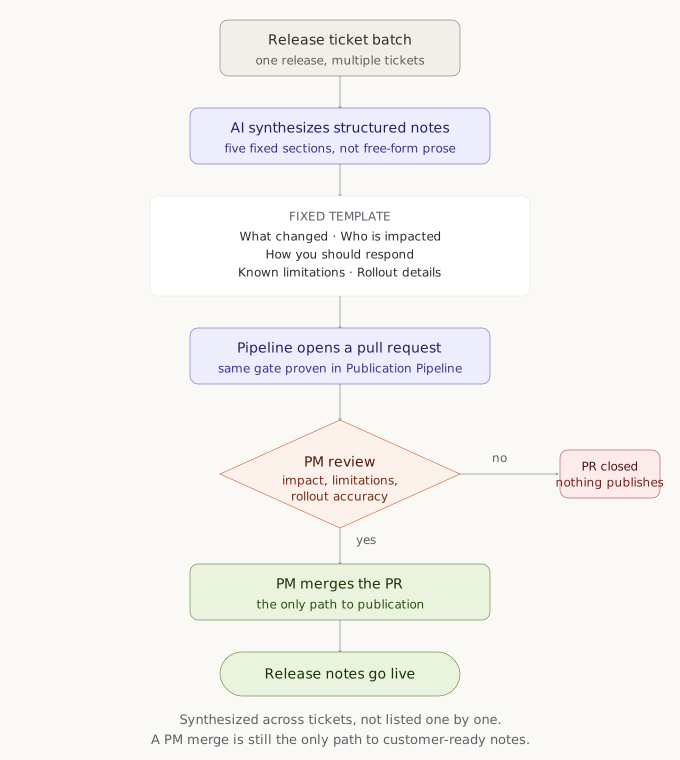
Structured Release Note Draft
     ↓
PM Review
     ↓
Customer-Ready Release Notes
This is built and running. A batch of release tickets feeds a real OpenAI call, which synthesizes a structured draft across five fixed sections - what changed, who’s impacted, how to respond, known limitations, rollout details - rather than free-form prose. The draft opens as a pull request on this site’s own repository; nothing publishes without a human merge, the same review gate proven in the Publication Pipeline.
The documentation team then validates:
- what changed
- who is impacted
- how users should respond
- known limitations
- rollout details
Content Gap Detection
Support Queries
     ↓
Repeated Questions
     ↓
AI Pattern Detection
     ↓
Documentation Gap
     ↓
Content Update
Support and customer success inputs can reveal gaps in documentation coverage.
AI can help identify repeated themes, but prioritization should be owned by documentation and product teams.
Governance Controls
AI-generated documentation must operate within clear guardrails.
| Control | Purpose |
|---|---|
| Style guide | Maintain voice and terminology |
| Templates | Ensure consistent structure |
| Review checklist | Prevent inaccurate publishing |
| Source traceability | Track where AI output came from |
| Human approval | Maintain accountability |
| Version control | Manage changes safely |
Measurement System
| Metric | What it shows |
|---|---|
| Draft cycle time | Speed of first draft creation |
| Review cycle time | Efficiency of validation |
| Release readiness | Documentation availability before launch |
| Content consistency | Alignment with standards |
| Support ticket trends | Documentation gap reduction |
| Documentation debt | Backlog of outdated or missing content |
Workflow Impact
AI-Assisted Drafting
     ↓
Faster Documentation Cycles
     ↓
Better Consistency
     ↓
Release-Ready Content
     ↓
Scalable Documentation Operations
A strong AI-assisted workflow helps documentation teams scale production without losing quality.
---Key Insights
AI improves documentation speed only when the workflow already has structure.
Without templates, standards, review checkpoints, and source discipline, AI creates more noise than value.
Applied Experience
This page is a forward-looking model for most of what it describes, with one piece built for real: Release Notes Automation runs against this site today, the same PR-gated review pattern proven in the Publication Pipeline, applied to a structured ticket batch instead of a single spec.
The wider version - content gap detection from support patterns, full input-source coverage across PRDs and engineering notes, terminology consistency checks - is designed, not yet implemented. This extends the same principle I’ve already proven at Zeta with a two-stage AI-assisted editorial pass that cut edit-cycle time 30-40%, with human sign-off retained on every release.
I built this out the way the model itself prescribes: starting narrow, with one real workflow, before generalizing. Release Notes Automation was that first narrow slice.