Knowledge Base Architecture
I led the knowledge architecture initiative end-to-end — taxonomy, governance model, contributor workflows — that took the team from scattered documents to a structured, ownable system.
60-Second Summary
Problem
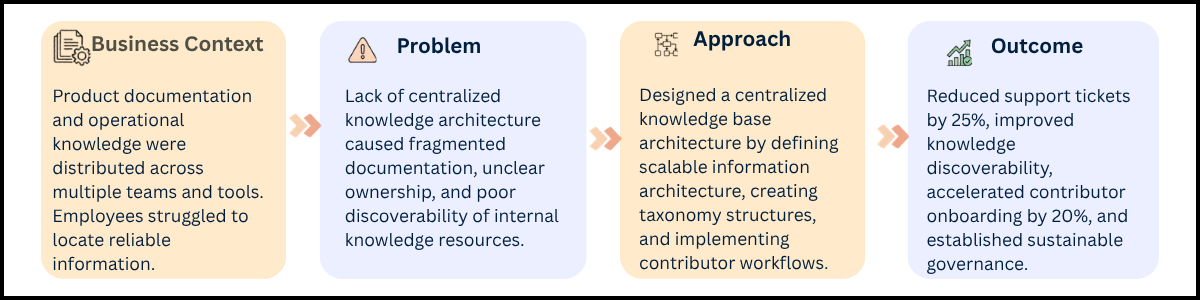
Product documentation and operational knowledge were scattered across teams and tools.
This made it difficult for employees to:
- Locate reliable information
- Identify the correct source of documentation
- Contribute new knowledge effectively
Approach
I owned and built a centralized knowledge base architecture focused on discoverability and governance, then established the contributor model that let the system scale beyond what I could maintain alone.
Key initiatives I led:
- Designing scalable information architecture for the knowledge base
- Building taxonomy structures for better content discovery
- Implementing contributor workflows and documentation governance so other writers and teams could add knowledge without compromising structure
- Establishing standards for knowledge organization that outlasted any single contributor
The focus was on treating documentation as a structured knowledge system rather than isolated documents — and building the governance that kept it that way as more people contributed.
Impact
- Reduced support ticket volume by 25%
- Authored 80+ troubleshooting guides for support-agent personas and revamped 40+ for end-user self-service
- Built the taxonomy and contributor workflows that let other writers add knowledge without breaking structure
- Established governance models for knowledge systems that did not depend on me being in the room
Related
Knowledge Architecture Model - the broader information model behind this work