Skip to content
Knowledge Architecture Systems

Knowledge Architecture Systems


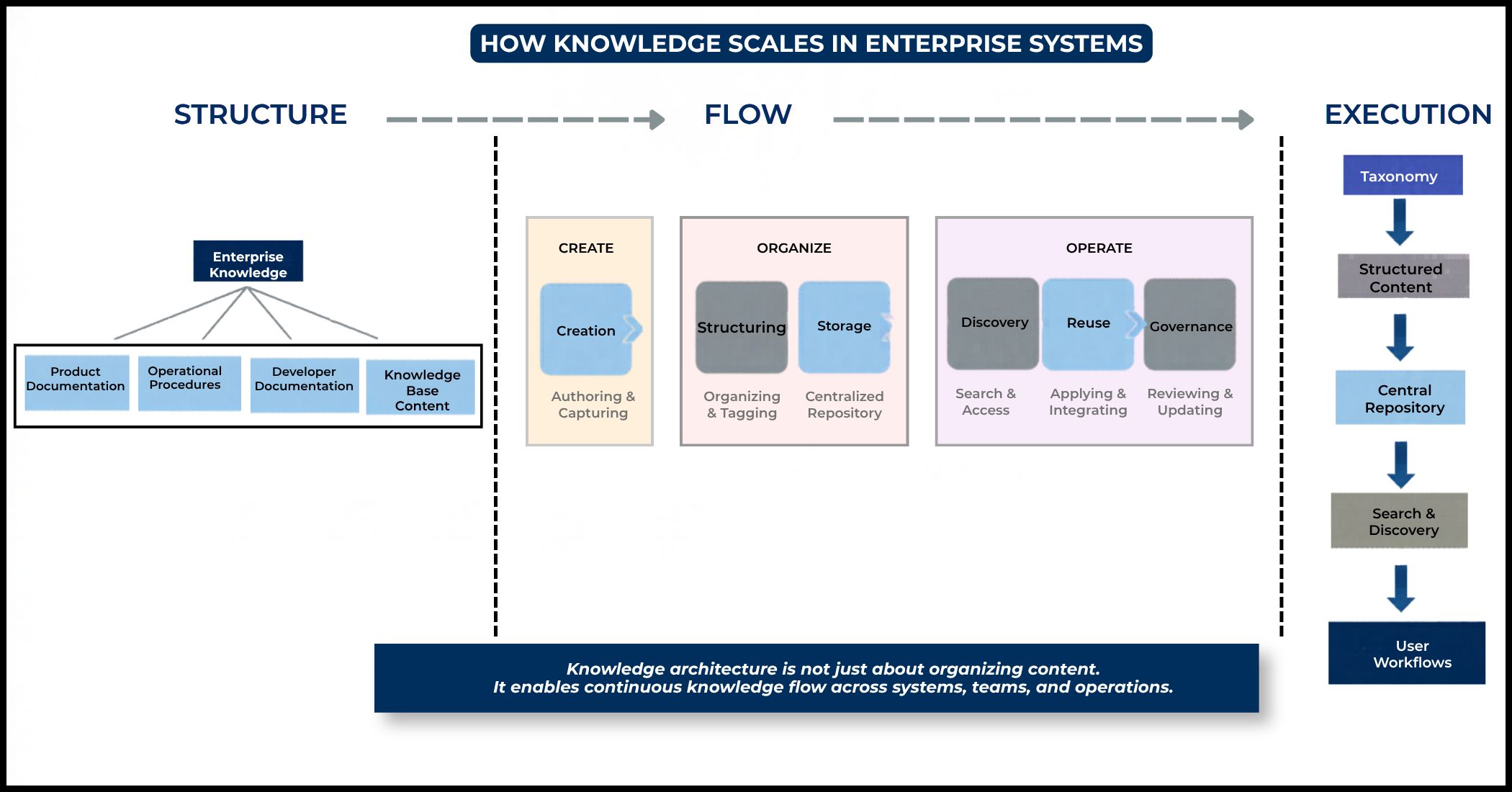
Knowledge architecture focuses on structuring information so that it remains accessible, reusable, and scalable across teams.

In large organizations, knowledge is often distributed across documentation, support systems, internal tools, and project repositories. Without a structured architecture, this information becomes fragmented and difficult to maintain.

A well-designed knowledge architecture provides the framework that organizes documentation into structured, navigable systems.

Objectives

The goal of knowledge architecture systems is to:

  • improve discoverability of technical knowledge
  • organize information into consistent structures
  • support scalable documentation practices
  • enable knowledge reuse across teams

These systems help organizations manage large volumes of technical information efficiently.


Core Components

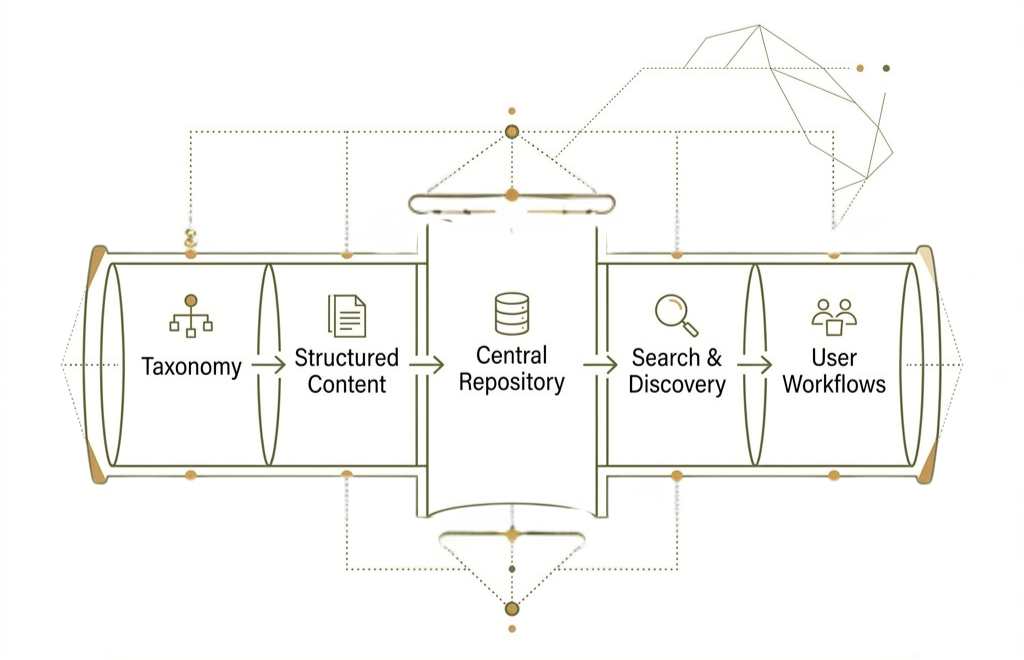
A knowledge architecture system typically includes several structural components.

Information Taxonomy

Taxonomies organize knowledge into hierarchical structures.

Examples include:

  • product documentation
  • operational procedures
  • developer documentation
  • knowledge base articles

Taxonomies provide the foundation for navigation and content classification.


Content Structure

Consistent content structure ensures that documentation remains predictable and easy to navigate.

Examples include:

  • standard page templates
  • structured headings and sections
  • consistent documentation patterns

Structured content improves readability and maintainability.


Knowledge Repositories

Knowledge repositories store documentation in centralized systems.

Examples include:

  • documentation portals
  • internal knowledge bases
  • version-controlled documentation repositories

Centralized repositories prevent knowledge fragmentation.


Search and Discovery

Effective search capabilities are essential for large knowledge systems.

Search infrastructure should support:

  • keyword search
  • content indexing
  • contextual navigation

These capabilities allow users to locate relevant information quickly.


Knowledge Governance

Governance ensures that documentation remains accurate and maintained over time.

Governance practices include:

  • documentation ownership
  • content review cycles
  • version control policies
  • documentation standards

Without governance, knowledge systems quickly become outdated.


Long-Term Benefits

Organizations that invest in knowledge architecture gain several advantages:

  • improved onboarding for new engineers
  • faster problem resolution
  • better knowledge reuse across teams
  • reduced duplication of documentation

Knowledge architecture transforms documentation from isolated content into a scalable organizational system.